Case Study
Advancing 508 Compliance to Support Record B2B Education Sales
105.31%
June 2026 revenue growth YoY
54.63%
2026 revenue growth YoY
record education-market coverage
Context
Pragmatic Works sells training services to both B2B and B2C markets, including institutions that receive federal funding — buyers for whom Section 508 compliance isn't optional, it's a procurement gate. When I joined, accessibility was treated as an edge case rather than infrastructure: content, media, and web experiences across the company carried little consideration for it, despite a rebrand four years earlier that had never been backed by governance to keep it consistent.
I started advocating for 508 compliance early — not just to mitigate ADA and EAA legal exposure, but because accessibility is usability. A product a meaningful share of users can't operate isn't a finished product; it's a liability with an interface on top of it. Leadership ran on a feature-factory model that prioritized visible output over infrastructure investment that doesn't show up on a roadmap slide, and my case for accessibility competed against a leadership instinct to evaluate product decisions by personal preference rather than job-to-be-done or user data. That mismatch shaped most of what follows.
Evidence
An automated accessibility scan of a single marketing page gave the advocacy hard numbers: 9 visible errors, 8 contrast errors, 36 alerts, and an AIM score of 6.8 out of 10 — and that was just one page. A broader manual review turned up contrast failures and inconsistent navigation patterns across the rest of the marketing site that a single-page automated scan couldn't surface on its own. It wasn't an isolated problem — the marketing site and the learning platform used entirely different navigation and CTA patterns, so a prospective institutional buyer's first impression of our maturity depended on which door they happened to walk through.
That gap kept widening. The marketing team's output — web pages, social, print — drifted further from the four-year-old rebrand guidelines with every cycle, accelerated by AI-adopted content production with no accessibility- or brand-literate human reviewing it before publish. Fluent output got mistaken for correct output: content that read well but had never been checked against contrast ratios, alt text, or the brand system it was supposed to represent.
I raised the risk directly at a leadership strategy session, presenting a SWOT that named 508 non-compliance as both a threat (ADA/EAA exposure) and an opportunity (unlocking federally funded education accounts that require it). When the president asked for my honest read, I said neither site was compliant.
The response from marketing leadership was a color change — "we changed the blue to a darker blue" — one that itself drifted from the rebrand palette and addressed only a fraction of the actual WCAG AA violations. The exchange was a clear signal of the gap between how the organization perceived its compliance posture and where it actually stood.
Advocacy
Getting accessibility treated as revenue infrastructure rather than a design nice-to-have meant building a case that non-designers could act on. Over time that meant an experience-risk memo translating the audit into business-legible terms, sponsor outreach to get the right stakeholders in the room, a product-experience pilot brief scoping a fixable first slice of the problem, and a 30-day action plan.
The PM was an ally throughout — he won a full quarter for his team to focus on tech debt, a real concession in a feature-factory culture. But leadership consistently prioritized new feature output over data-backed infrastructure work, even when those features weren't tied to a clear job-to-be-done.
The turning point wasn't internal. It was external: prospective B2B clients started asking directly about our 508 compliance during sales cycles. That was the moment leadership recognized the exposure I'd been naming for years — not because the argument changed, but because the market started asking the same question I had been.
Design & Governance
On the learning platform, I had governance leverage the marketing site never got. I baked WCAG AA into the design system itself — color tokens and Figma components built to standard from the start, rather than audited after the fact — and supplemented the component library with accessibility annotations so the team understood not just what to build, but why each pattern mattered for the MVP.
We rebuilt the UI library on ShadCN components to bootstrap a genuinely accessible foundation rather than continuing to patch an inaccessible one, and I introduced WAVE by WebAIM so the team could validate their own work instead of relying on me to catch every violation after the fact. The PM and I also renegotiated what "MVP" meant: 508 compliance moved from a stretch goal to a publish requirement, a definition-of-done change that made accessibility non-negotiable rather than aspirational.
The marketing site remains an open risk. It's the surface most prospective buyers actually land on first, and it's still furthest from compliant — a reflection of where governance hadn't yet reached, not a fix waiting to be picked up. I'm naming it here because precision matters more than a tidy ending: this is what shipped, and this is what didn't.
Reflection
I'm autistic, and directness is often how I operate best — it's a large part of why I could see this risk clearly and say it plainly when others were more inclined to soften it or let it slide. But I've learned that being right isn't the same as being heard. Technical accuracy delivered without attention to timing, relationship, and how a room is likely to receive it can get the substance of a warning dismissed along with its delivery.
I'm working on pairing the honesty that makes this kind of advocacy effective with more deliberate attention to the human context around it — not softening the truth, but sequencing and framing it so it has a better chance of landing. That's a genuine growth edge for me, not a strategy I regret using. The alternative — staying quiet about a real risk to avoid friction — was never the right trade.
Outcome
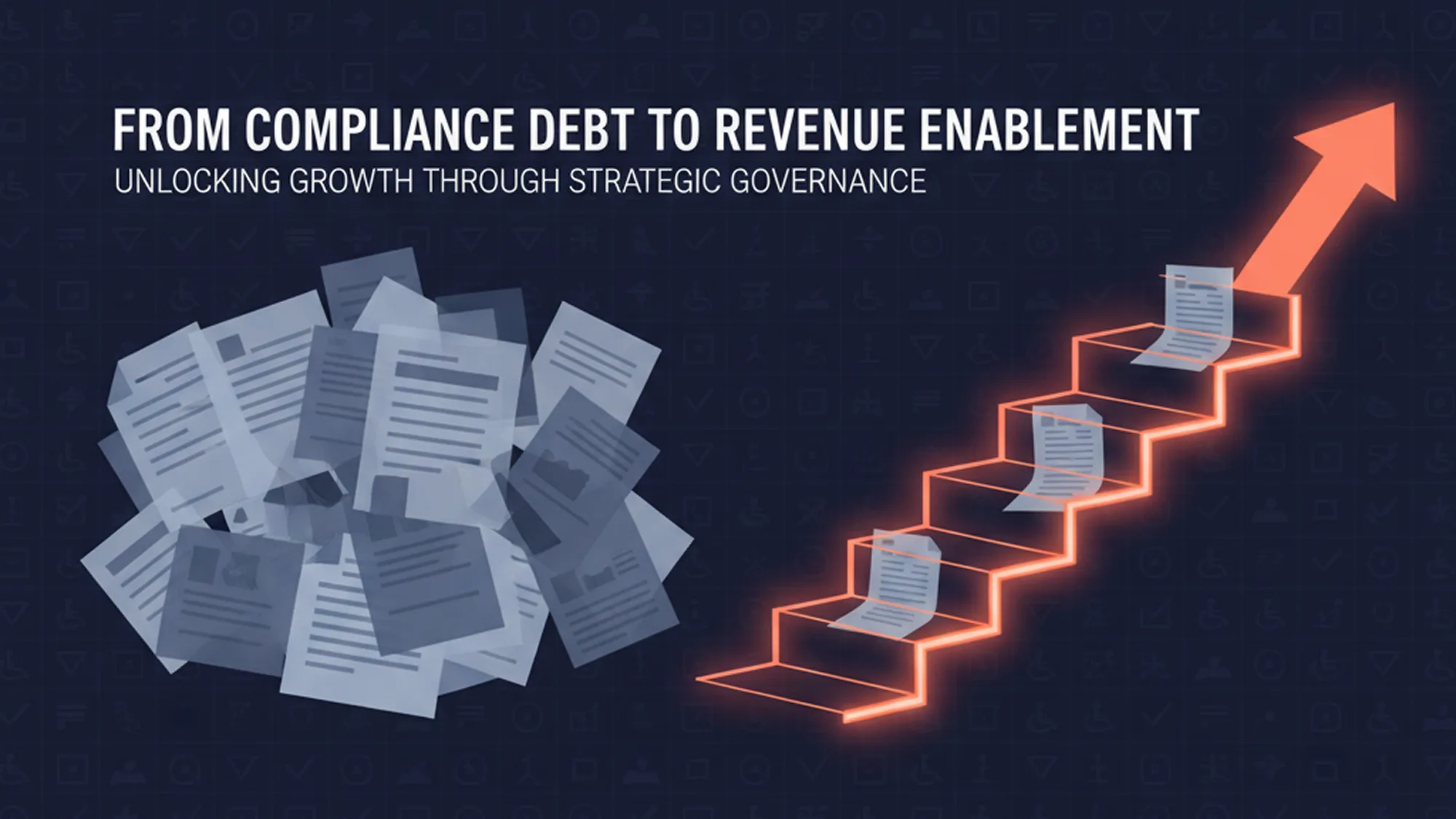
The market ultimately validated years of advocacy. June 2026 was the company's highest-grossing month on record, up 105.31% year over year; 2026 revenue through the same period was up 54.63% over the same span the year prior — with education-market coverage hitting a record high as the compliance friction that had been costing us federally funded accounts came down.
UX-led platform readiness didn't single-handedly cause that growth, but it materially contributed to it by reducing the accessibility, trust, and procurement friction that had quietly been costing deals for years. The larger lesson: accessibility and digital governance aren't a compliance checkbox or a one-time pilot. They're growth infrastructure, and they hold up under a standing review — not a fire drill after a client asks the question you'd already been asking yourself for years.
Let's Connect
Like what you see?
Let's talk about what we could build together.