Case Study
Onboarding for Habit — Applying Behavioral Science to Reduce Churn and Grow Subscription Lifespan
40%
longer avg. subscription lifespan
8.5%
reduction in offboarding volume
28%
of new users adopted the feature
Context
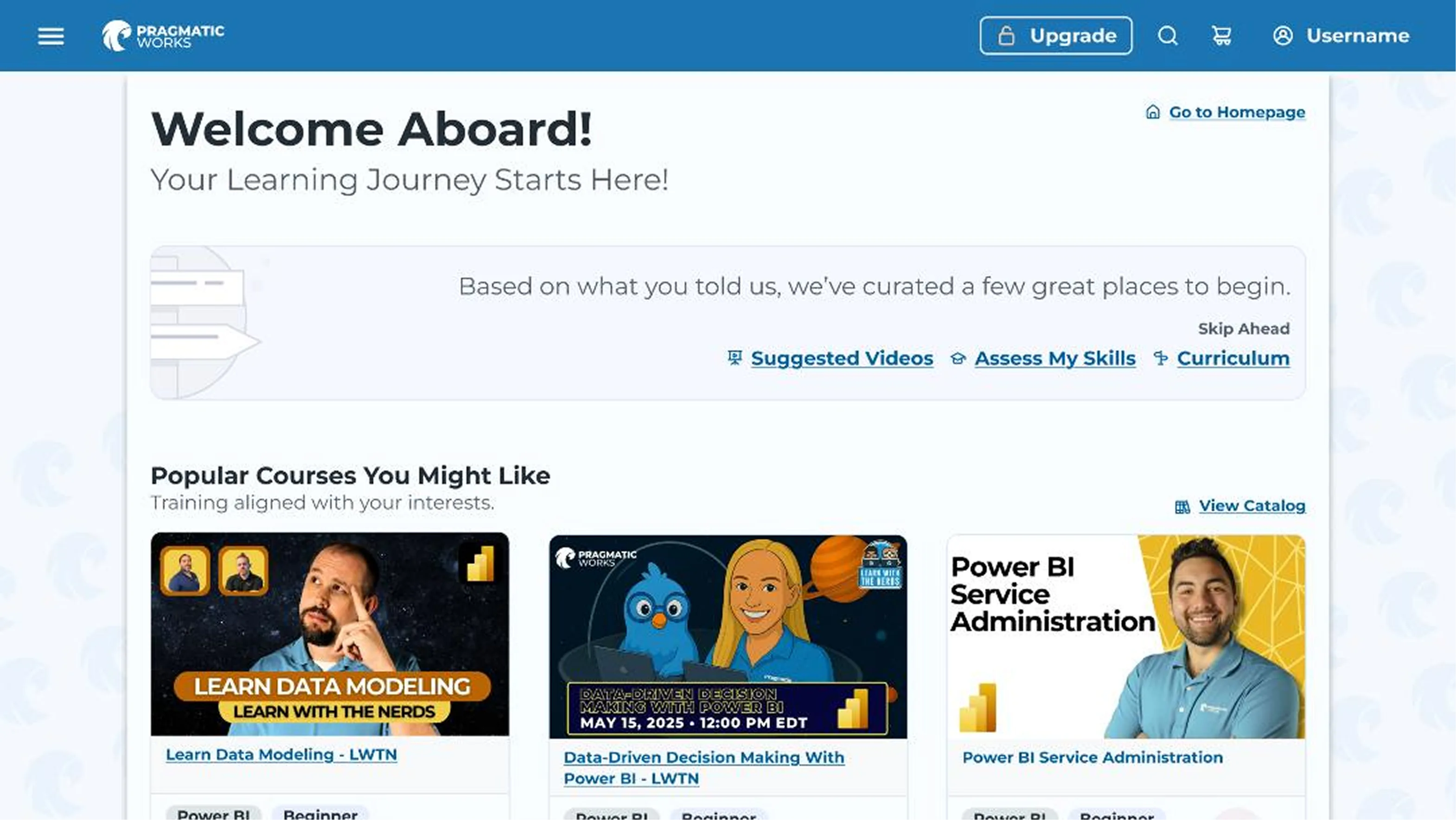
Pragmatic Works serves both individual learners and enterprise teams with on-demand data and technology training. While the team was consistently shipping features, I noticed the team's metrics skewed toward outputs — features shipped, content volume — rather than the leading indicators of sustainable growth. I built a set of data-driven product visualizations to surface that gap and make the case for a more outcome-centered approach — bringing a behavioral design sprint to leadership as a way of modeling what that collaboration could look like in practice. The focus: the B2C individual subscriber segment, where monthly churn was quietly working against the org's growth goals.
The Sprint
Over three meetings across three weeks, I facilitated a light behavioral design sprint with key stakeholders — a structured process for grounding product decisions in human behavior and measurable outcomes rather than assumptions. We worked toward a central question: how might we encourage individual learners to continuously engage with training content so they see lasting value in an annual subscription? From that anchor, I mapped a desirable customer journey — tracing a potential buyer from awareness through purchase, onboarding, and sustained engagement — and used it to identify where the experience was breaking down and where interventions could have the most impact.
Buy-In & Prioritization
The sprint surfaced several potential interventions across the customer journey. The proposal I brought to stakeholders outlined the full landscape, but buy-in landed on one: a targeted improvement to the onboarding flow. This gave me room to address quality gaps from previous onboarding work while adding the intervention I felt most confident about — one rooted in a recurring theme I'd heard directly from customers.
The Intervention
Offboarding surveys pointed to a consistent theme: individual learners wanted to use the platform but struggled to protect time for it. Meanwhile, data on long-term subscribers revealed a shared behavior — they scheduled dedicated training sessions, typically on desktop, in advance. The gap wasn't motivation. It was structure.
Drawing on the behavioral science concept of implementation intentions — the finding that people are significantly more likely to follow through on a behavior when they commit to a specific time and place — I designed a calendar-based prompt into the onboarding flow. During account creation, users are invited to schedule a recurring training reminder. The web app generates an ICS file that opens directly in Outlook or any calendar client. A small interaction, but one grounded in how the platform's most successful users already operate.
Impact
At 30 days post-launch, average monthly subscription lifespan increased from 51.7 to 72.2 days — a 40% gain. Offboarding flow volume dropped 8.5%, and 28% of new users who reached the onboarding step downloaded the ICS reminder — a strong adoption signal for a voluntary interaction. These are early indicators, not a concluded experiment, but the direction is clear. The intervention also lays the groundwork for what comes next: when the backend supports a direct monthly-to-annual upgrade path, users who've already built a scheduling habit are the natural conversion target.
What's Next
The remaining interventions from the sprint are queued, pending the backend work required to support a direct monthly-to-annual upgrade flow. Once that path is open, the scheduling habit established in onboarding becomes the top of a conversion funnel — users who've already committed to training time are the most natural candidates for an annual subscription. The sprint model itself remains a template for how the team can continue designing toward outcomes rather than outputs.
Let's Connect
Like what you see?
Let's talk about what we could build together.